Legacies of Repression: How Europe’s Violent 20th Century Still Shapes Its Politics
by Laia Balcells, Patricia Justino, and Andrea Ruggeri
Across Europe, the first half of the 20th century brought civil wars, fascist takeovers, foreign occupations, genocidal violence, and entrenched authoritarian rule. The effects of this violence and repression outlasted the end of regimes, often being transmitted across generations. They left lasting marks on voting behaviour, party systems, and attitudes towards violence and justice that are still visible today in electoral maps, views on democracy and minorities, and in how communities remember (or minimize) the past.
The link from past to present is not straightforward. The same civil war or authoritarian regime can set some communities against violence and leave others more disposed to it, and exposure to repression can fuel demands for accountability in one context but stir nostalgia for “order” in another.
A new Comparative Political Studies special issue on Legacies of Repression and Resistance in Early Twentieth-Century Europe explores this variation to ask when episodes of mass violence, mobilization, and authoritarian control reproduce themselves, and when they instead generate backlash, new cleavages or efforts at redress. Authoritarian rule rests not only on constitutions and regime labels, but on local practices of violence, control, co-optation, and mobilization that often outlive the dictatorship itself.
A Typology of Legacies
In this approach, legacies are not vague echoes but causal links between a historical episode and a later outcome, carried by identifiable mechanisms. A legacy exists when a contemporary pattern cannot be understood by present-day causes alone because it still bears the imprint of an earlier conflict or institution.
The special issue introduction distinguishes two broad families. On the one hand, in legacy congruence, the phenomenon observed today resembles the one in the past: past violence predicts later violence, partisan loyalties resurface under new party labels, repertoires of mobilization survive regime change and return when institutions weaken. On the other hand, in legacy alteration, the phenomenon observed today is of a different kind compared to the past political phenomenon: violent conflict leaves behind lasting electoral divides rather than renewed war; armed resistance is recast as peaceful civic campaigns; authoritarian institutions evolve into semi-democratic arrangements that retain informal hierarchies. This typology – contrasting congruent and altered legacies – sharpens what is meant by a “legacy” and shifts attention from showing that history matters to explaining how it continues to do so.
Moreover, the introduction identifies seven legacy types—persistency, discontinuity, creation, reactivation, transformation, substitution, and blunting—and emphasizes that legacies must be understood as causal chains linking past phenomena to present-day outcomes, each mediated by specific mechanisms.
Legacies in Practice: Evidence from Five Countries
The country studies put this typology to work on concrete histories, showing how similar kinds of repression and resistance can leave very different marks.
Finland: class conflict and the ballot box
In Finland, the key episode is the 1918 Civil War between insurgent “Reds” and government “Whites”. Municipalities that saw more lethal violence did not relapse into conflict. Instead, they developed distinctive electoral profiles for decades: support for left-wing parties declined, while conservative and right-wing forces gained ground (Meriläinen & Mitrunen, 2023).
Three mechanisms connect wartime violence to later voting. First, the post-war land reform and the extension of the municipal franchise reduced economic and political inequality, and voters in the hardest-hit areas rewarded the governing center-right parties for these concessions. Second, in “White Finland”, post-war narratives written from the victors’ perspective portrayed the Reds as dangerous and illegitimate, fueling a backlash against parties associated with them. Third, executions and deaths in prison camps mechanically shrank the pool of left-wing supporters. A violent class conflict thus left a long-run imprint not as renewed fighting, but as persistent electoral cleavages.
Italy: fascist reactivation and resistance legacies
In Italy, twentieth-century legacies pull in two contrasting directions. One runs through the early years of the Fascist movement, built from below through party clubs, street squads and ritualized shows of force. These networks did not vanish in 1945. Where fascist mobilization had sunk deep roots, activists kept a ‘tripod’ of assets alive – knowing what they believed, how to use violence and whom to call on – even when it was costly to show it in public (Costalli et al., 2024).
When Italian democracy later entered the “Years of Lead” in the 1970s and 1980s, these former strongholds were more likely to experience neo-fascist attacks. Violence tended to spike in moments when the state appeared uncertain about how to contain extremism. Fascism’s local infrastructure behaved like a karst river: apparently buried after the war but still flowing underground and ready to surface when political rock layers cracked – old mobilization reappearing decades later in new cycles of right-wing terrorism.
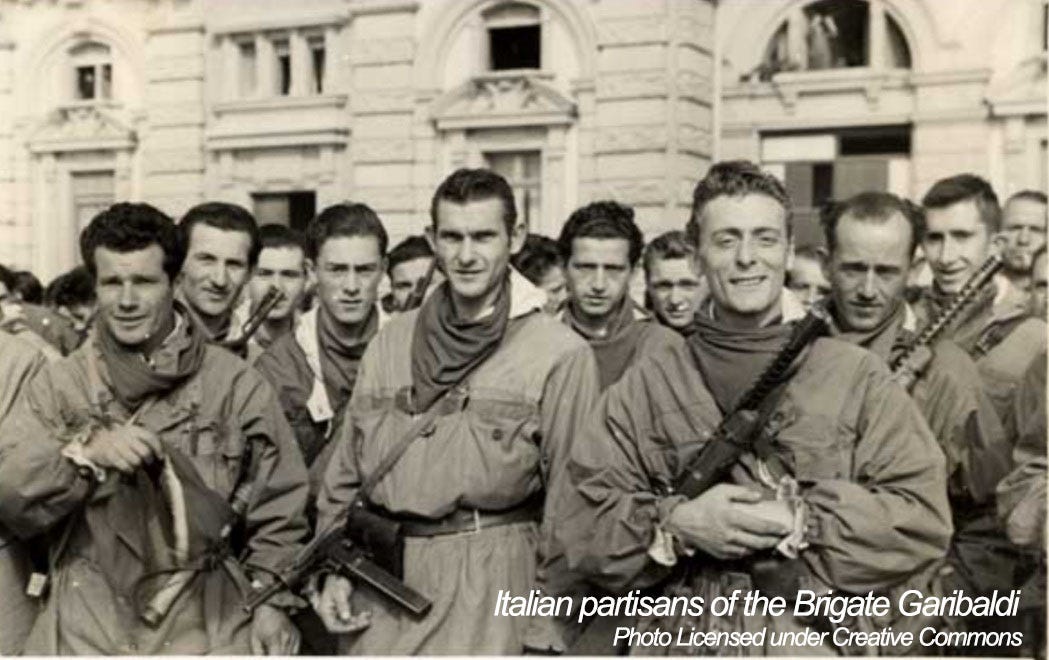
A second Italian legacy runs in the opposite direction. In the final years of the Second World War, armed partisans fought Nazi occupiers and their fascist allies. The units were demobilized after 1945, but in some communities the memory of resistance became a living political resource. Families, partisan associations, cultural groups and municipal officials acted as “memory entrepreneurs”, sustaining local commemorations, naming streets and schools after partisans, and anchoring national narratives in specific sites of arrest, execution or shelter (Cremaschi & Masullo, 2024). More than seventy years later, these same places showed higher support for a grassroots campaign to strengthen Italy’s anti-fascist law. The memory work carried out over decades helped transform the legacy of armed resistance into peaceful, bottom-up civic mobilization in defense of democratic norms.
Portugal: co-optation and blunted protest legacies
Portugal shows how authoritarian co-optation can suppress legacies of opposition. Under the authoritarian Estado Novo regime, repression was paired with corporatist Casas do Povo, run largely by local landowners who distributed benefits, mediated labour relations, offered tightly controlled channels for participation and helped monitor rural workers (Albertus & Schouela, 2024). In the large estates of the south, landless peasants repeatedly mobilised against landlords and the dictatorship, while elsewhere mobilisation was weaker and corporatist structures more entrenched.
After democratization in 1974, areas with a stronger history of protest showed higher support for the Portuguese Communist Party (PCP). But this pattern only appeared where corporatist control had been weak. In municipalities with powerful Casas do Povo, the electoral legacy of past mobilization was far more muted, and those same institutions later helped landowners organize against radical land reform.
Germany: bystanders, perpetrators and accountability
The two German contributions in the Special Issue focus on the legacies of Nazi atrocities but look at different actors. One examines localities exposed to death marches and other visible episodes of mass violence as the regime collapsed. In these places, civilians saw starving prisoners driven through their streets or dying in improvised camps. Decades later, the same areas show lower support for far-right parties and authoritarianism (De Juan et al., 2023). Being forced to confront extreme cruelty against defenceless victims appears to have generated lasting moral and psychological dissonance that undermined residual attachment to the regime’s ideology, pushing politics away from, rather than back toward, authoritarianism.
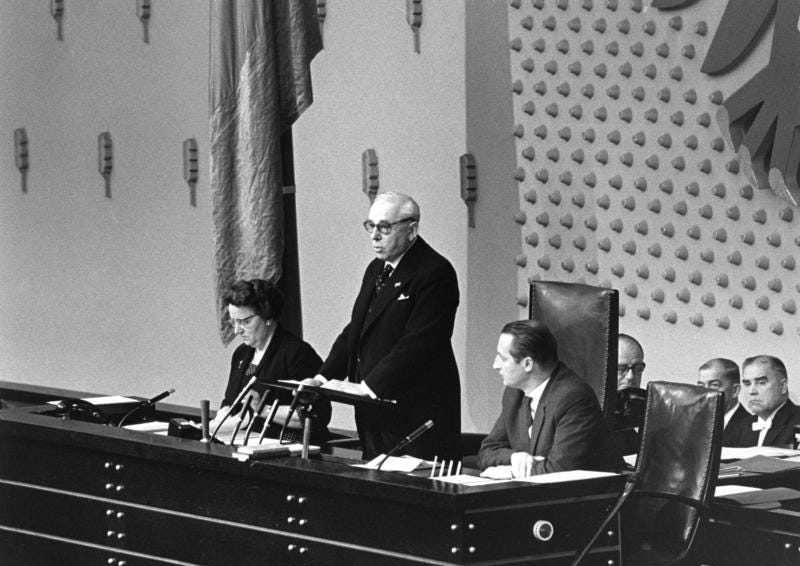
The fourth Bundestag, 1961. Photo: German Federal Archives.
The second study turns to political elites in post-war West Germany and a key “question of conscience” in 1965–69, when the Bundestag held a free roll-call vote on whether to extend the statute of limitations for Nazi crimes. Members of parliament elected in constituencies with synagogues attacked during the November 1938 pogroms were more likely to support extension; those with Nazi Party pasts were less likely (Charnysh & Riaz, 2023). The geography of violence thus mapped onto an internal divide within the elite between exposed bystanders and former perpetrators, with the bystander experience reshaped in a democratic setting into an active pro-accountability stance.
Israel: victimhood, memory, and ongoing conflict
Israel, a non-European country, offers a different kind of example. In this case, Holocaust legacies are carried less through family histories than through state narratives in the shadow of ongoing conflict. The key divide is between Jewish Israelis more or less exposed to commemorative schooling and public rituals that stress collective persecution and existential threat (Damann, Fachter & Wayne, 2023).
In this context, historical trauma is channelled into ingroup defence rather than empathy: suffering does not translate into solidarity with other victims but underpins hostile attitudes toward perceived enemies, including Palestinians. A legacy of genocide that occurred in European soil thus reaches the present in Israel mainly through education and commemoration, as a defensive collective identity.
Why These Legacies Matter Now
Across these cases, similar episodes of civil war, partisan resistance, authoritarian co-optation, mass atrocities and genocide do not yield a single “legacy”. In some places they produce persistence; in others, regime aversion; in others still, renewed mobilisation or altered outcomes ranging from new party systems to civic campaigns and hardened intergroup boundaries (Ruggeri, Balcells & Justino, 2025). The differences turn on who experienced what, how those experiences were organised and narrated, and which mechanisms of fear, guilt, material incentives, organisational networks or memory work carried repression and resistance into later generations.
For debates on democratic backsliding, transitional justice or the politics of memory, the implication is clear: it is not enough to say that “history matters” and stop there. These studies show what it means to be precise about which past matters, for whom and through what, and to ask whether the relationship is one of congruence or alteration, carried mainly by biographies, local organisations or national narratives. Legacies are neither destiny nor decoration, but patterns created and reworked by institutions, organisations and stories. How societies choose to govern, remember and narrate their violent pasts will keep structuring politics long after the last veterans, bystanders and survivors are gone.
The special issue introduction outlines three key forward-looking priorities for legacy research. First, they call for deeper theorization of mechanisms, urging scholars to examine how legacies are transmitted across micro, meso, and macro levels, why some fade while others reactivate, and under what conditions past events continue to shape present politics. Second, they emphasize the need to make legacy trajectories explicit by identifying when and where different legacy types—such as persistency or transformation—should be expected, rather than assuming automatic continuity. Third, they highlight the importance of attending to multiple levels of analysis, noting that mechanisms operate through individuals and families, communities and organizations, and broader institutional or global forces. Understanding where legacies “live” is crucial for explaining their variation across time and space.
Laia Balcells is the Gallagher Family Professor of Government at Georgetown University. Her research explores the causes and consequences of political violence and repression, warfare dynamics, nationalism and ethnic conflict, and transitional justice. She is the author of Rivalry and Revenge: the Politics of Violence During Civil War (Cambridge University Press, 2017).
Professor Patricia Justino is Director Designate of the United Nations University World Institute for Development Economics Research (UNU-WIDER). Her research focuses on inequality, governance, and inclusive development, particularly the links between political violence, social policy, and long-term development outcomes. She is co-founder of the Households in Conflict Network (HiCN) and a Professorial Fellow (on leave) at the Institute of Development Studies (IDS). She holds an MPhil in Economics from the University of Cambridge and a PhD from the University of London. Her website is https://patriciajustino.net
Andrea Ruggeri is Professor of Political Science at the University of Milan, following a decade at the University of Oxford, where he served as Professor of International Relations and Director of the Centre for International Studies. He also co-coordinates the Italian Standing Group of International Relations, is a Senior Research Associate at Oxford and serves as a Senior Associate Research Fellow at ISPI.
Thanks for reading! Subscribe for free to receive new posts and support my work.